

Solution

Biomedical Applications
Terahertz technology holds transformative potential for the future of biomedicine, offering a unique, non-invasive window into biological tissues and processes. Its non-ionizing radiation can safely penetrate many non-conductive materials and is highly sensitive to water content and molecular vibrations. This enables label-free, high-contrast imaging for early-stage disease diagnosis—such as detecting skin cancers, dental caries, and burned tissues—based on their distinct terahertz signatures.
Beyond imaging, terahertz spectroscopy provides groundbreaking tools for precise pharmaceutical analysis, including the characterization of crystal forms in drug formulation and real-time monitoring of tablet coating uniformity. Looking ahead, continuous advancements in compact, high-sensitivity terahertz systems will drive its integration into clinical and laboratory settings, paving the way for next-generation diagnostic platforms, in vivo monitoring, and personalized medicine.
Related Solutions


Related News


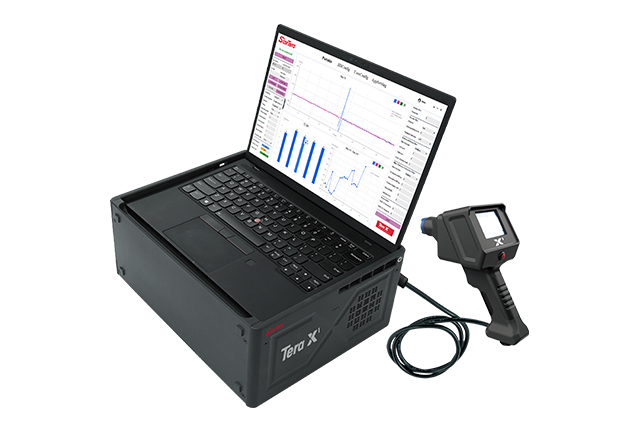
AI-Powered Terahertz Inspection Platform Exclusively for Aerospace MRO---TERA X1
Built specifically for aerospace aircraft maintenance scenarios, it leverages terahertz non-destructive testing principles to accurately measure coating thickness and detect hidden defects in multi-layer structures at an early stage, safeguarding aircraft safety.
Continue Reading
12th International Workshop on Terahertz Technology and Applications
Fraunhofer Institute for Industrial Mathematics ITWM, Kaiserslautern, Germany
Continue Reading